
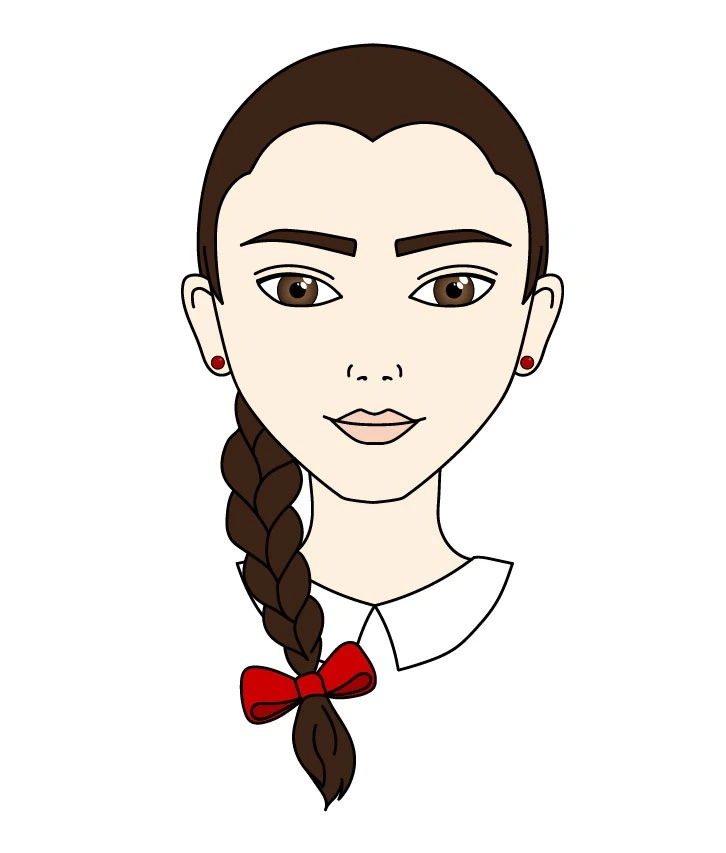
They say there is a magical place in Csík region where many medical conditions have been cured or significantly improved with natural mineral water of volcanic origin. To this day, myths, legends, and accounts of miraculous healing circulate about it. Who knows what’s the truth? Let me share with you one true story about the day I visited this place for the first time. In order to do that, we must travel back in time more than 100 years, until November of 1920.
Back then, whenever someone in Csekefalva talked about a persisting health concern, people instantly started telling stories of miraculous healing that happened in this special place nearby called Tusnádfürdő (Tusnád Bath). The girls in the yarn-spinning group often talked about the legend of the shepherd boy who repeatedly waded through the marshy swamps of a mineral water stream in search of his stray cattle. After a while, he noticed that the rashes on his feet, which were believed to be incurable, slowly disappeared after he walked through the mineral water mud. The news of the miraculous healing attracted widespread attention to the therapeutic properties of local mineral waters and brought more and more people to the region wishing to cure some medical condition.
At that time I was 10 years old and just learned to read, and I remember very well reading an article in the local newspaper ‘Csíki Lapok’ about the famous Tusnád Bath. It said that the healing effect of its mineral waters was recognized in the 1840s, and the development of the spa can be counted from this time.
The article also mentioned that during the 1848-49 revolution, the flourishing bath complex turned into a battlefield. The damage caused by the fighting was exacerbated by the revenge of the local residents, who resented the fact that they had been deprived of the free bath and mineral water, so they set the bath on fire. In 1852, on the initiative of Baron Zsigmond Szentkereszti and Count Benedek Mikes, began the development and reconstruction of the spa. Swiss-style villas were built in the area, which was then called Switzerland by the locals.
From the 1890s, as a result of developments, the established Stefánia Spa became more and more popular. It already contained four swimming pools, four cold salon baths, and 14 porcelain bathtubs. The most common medical problems treated there were diseases affecting the joints, the cardiovascular system, the nervous system, the digestive system, and the endocrine system.
At the beginning of the 1900s, the Csukás lake was created in the backwaters of the Olt river, and since then the spa guests could use it for boating in the summer and for skating in the winter. The First World War halted the development of the settlement, but soon after the spa life started again. New villas, treatment areas, sports fields, and confectionaries await the guests.
After reading the article all I could think of for days was visiting this wonderful place. Spa, cookies and skating on a lake, sounded like a fairytale to me. With a child’s enthusiasm, I shared with my mother all the reasons why we should go there, of course emphasizing the fact that my father’s aching knees would be the most important reason. My mother talked with my father and soon it was decided, we will go and try the healing power of mineral water on the last Sunday of November. There were two weeks left and I was counting the days. The night before I was so excited I hardly slept at all.
We left at dawn with the carriage, me, my parents, and my two brothers. I admired the sunrise and the frosty hills watching over us all the way until we arrived in Tusnád. The town was small, but it looked like a fantasy. It felt like I was visiting a different world, or at least a different country. There were some fancy big buildings, decorated villas like the ones in Switzerland, they looked very pretty. Many people were walking on the streets, but they didn’t seem to be going somewhere particular. Most of them were from faraway cities, dressed elegantly, smiling and enjoying themselves.
We spent the first part of the day at the Stefánia Spa, a huge building where we tried several different pools, paddling and swimming around like little fishes. The water had a rusty color, it also had a funny taste and sometimes was tingling my feet. After the spa, we visited the cookie shop, where we all had colorful creamy cakes with many sprinkles. Then finally the best part: we went skating on Csukás lake. I had never skated on such gigantic and straight ice. My skates were gliding too fast and I bumped into a few people, but they just laughed and helped me up. In the afternoon we headed back home to reach our farm by night. I would’ve loved to stay longer, but I also had to hurry home to note down all the new experiences before forgetting some important detail.
Was Tusnád Bath like they said it would be? Yes, and even better than that. Maybe except for the miraculous healing part. My father’s aching knees didn’t heal after the first visit, but the treatment must be repeated a few times to see results. This meant only one thing, that we should visit Tusnád Bath on a regular basis, and that’s what we did.
Klárika
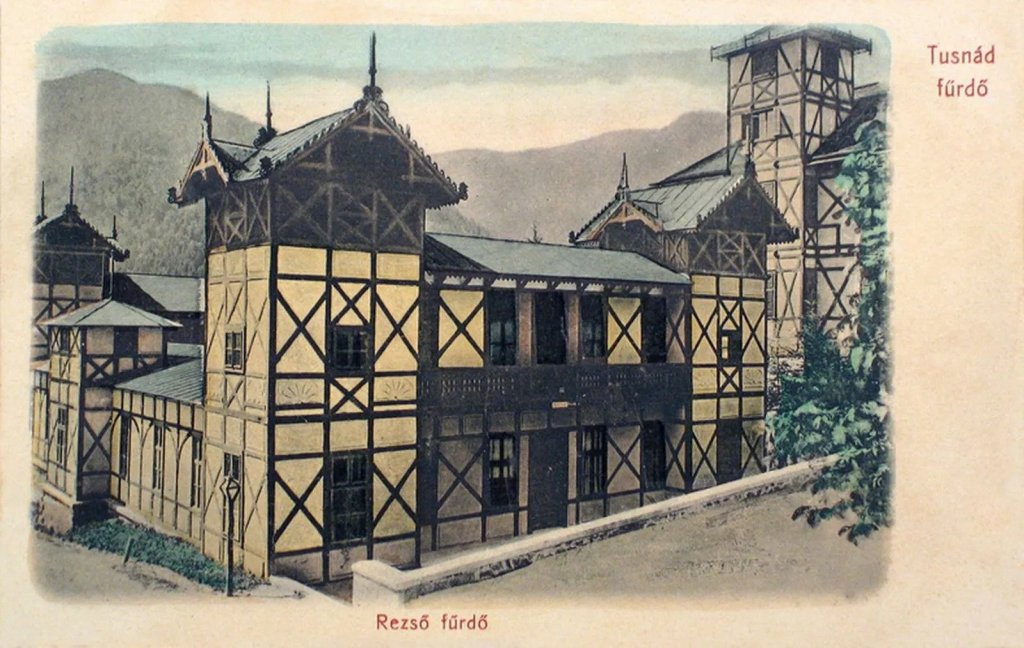
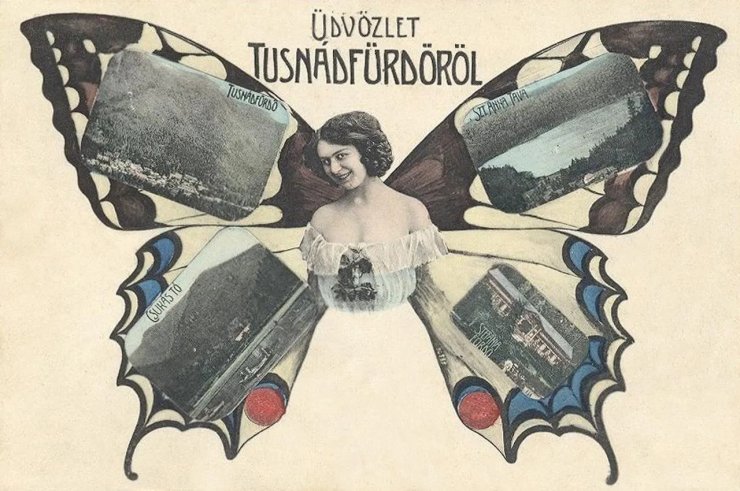
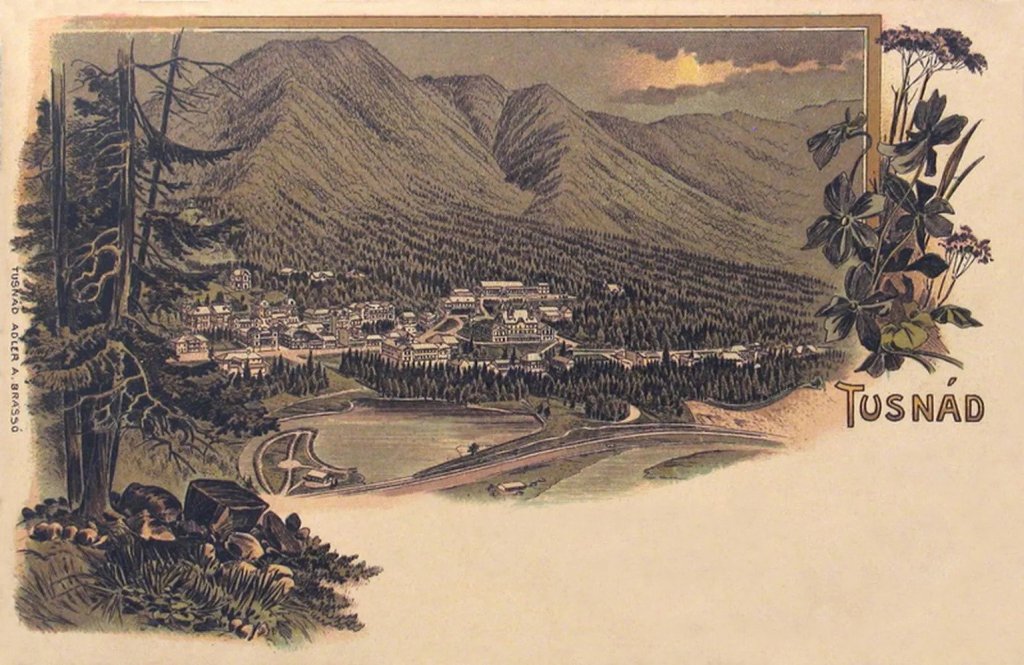
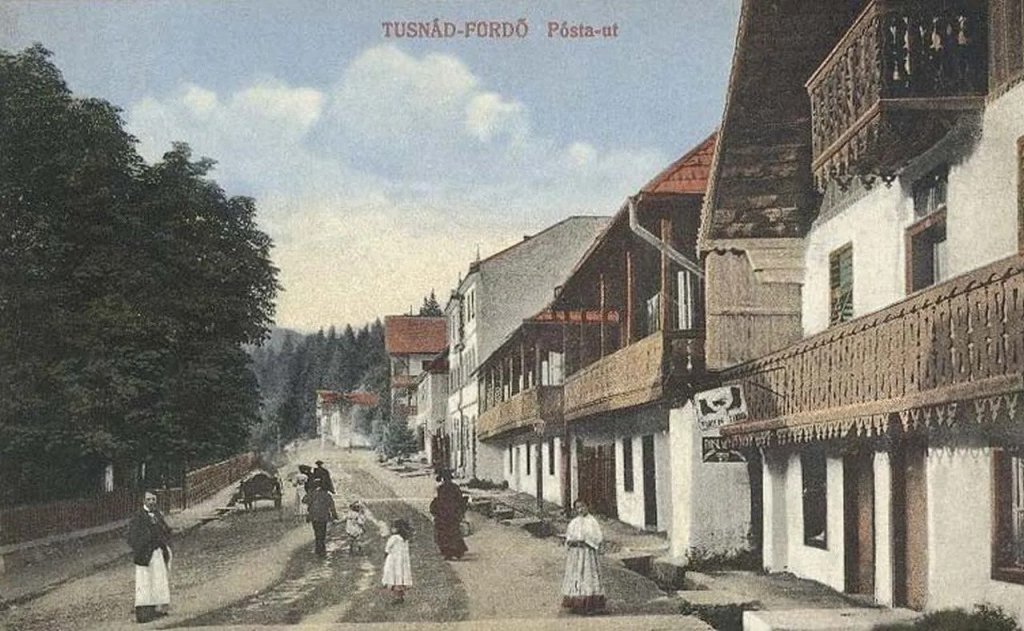
Source of the postcards: https://kepeslapok.wordpress.com/



 CYBERNOVELS L'20S