

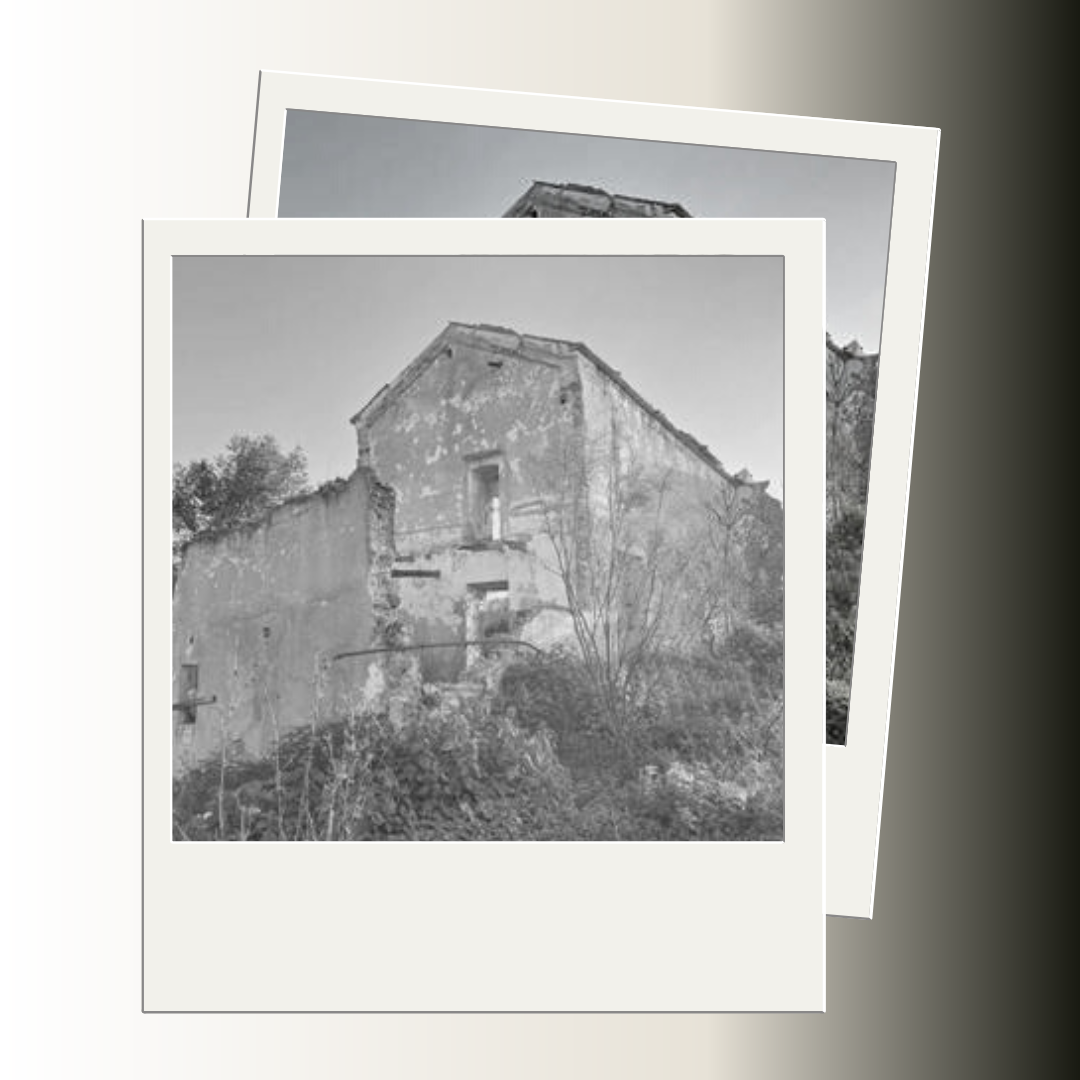
My Dear Mother-in-law
On the night of October 31, 1868, it rained as it had not rained in Urrácal for years. Rivers of water poured down the sandstone streets, carrying with them cliffs the size of a child’s head. It had been two days since Juan Reche had been able to go out to the countryside; the town was a quagmire and the accesses to the fertile plain were impassable.
That morning he had sent a boy who passed by his door to get some tobacco. The desperation of being cooped up in the one-room house was eating away at him. To make matters worse, his wife was pregnant and she would only sob and could not get out of bed.
At about midnight, his wife’s screams alerted Juan, who was nodding off in front of the fire with a lit cigarette in his mouth. It was raining harder than it had rained all day. The drops were the size of almonds and the wind was blowing so hard that Juan had to fight to get to the house of Julia, the village midwife.
A few hours later, amidst the heartbroken cries of her mother and the thunder in the purple sky, Cecilia Reche y Martínez was born, a plump baby with eyes as dark as the firmament of the night of her birth.
The child was already serene in her mother’s arms. Juan looked at her with a gesture of astonishment and disgust, his hands still full of blood. As he thought of the strong smell of sweat, blood and placenta, a drop slipped down the child’s forehead, causing her to burst into a deafening cry that overrode the storm and lasted all night.
Cecilia grew up healthy and became a young girl on her fourteenth birthday. She worked hard in the fields with her family and was an obedient and good girl. She liked to go to church and prayed the rosary whenever she could, even though she was worn out most nights.
She was 27 years old when she married and moved to Purchena with her husband. It was not that Cecilia lacked suitors, and surely she could have married much earlier in her town, but she prayed and prayed to find some boy from another place, so she could leave behind the house in which she was born, because it sometimes caused her nausea that she could not explain.
Cecilia was happy in her new home, and it seemed to her that her Antonio was a man with a good heart and a good family. Antonio wanted to have children and have his wife stay at home to take care of them. He dreamed of having a large family, since he, being an only child, had not been able to grow up with siblings, and he felt an emptiness inside for this reason.
Cecilia and Antonio had been trying to conceive a child since their wedding night, realizing how unsuccessful they were every time Cecilia soiled her petticoats.
As long as God was not gracious enough to bless the young couple with a child, Cecilia continued to go to the fields to help her husband and mother-in-law with the daily chores.
In the summer of 1896, while Cecilia was picking some tomatoes from her husband’s field, a tall, dark-skinned, curly-haired figure with at least a hundred thousand little ringlets appeared among the tomato plants.
The figure, named Mariano, introduced himself to Cecilia, waving his hand softly, and said he was looking for Antonio, the son of Señora María. Then Antonio appeared on the road calling out to the stranger, and she was captivated by his little ringlets as she watched them go towards the village.
September arrived and with it came the time of the grape harvest. Cecilia had thought of Mariano a couple of times, dulling the blush of her thoughts because they represented something forbidden.
—What a shame, Cecilia, what would Antonio say about you if he knew what you were becoming,» she thought to herself.
Work made her forget many things, including the desires of the soul, and while she was cutting the bunches of grapes, her Antonio had taken the barrels to be dovetailed, in which their grapes were to be shipped to the Americas.
On that September afternoon in 1896, Mariano went in search of his friend Antonio. He found his wife in his place, who with the first raindrops of the afternoon, wrapped herself in Mariano’s arms while the bells of the Church of Purchena rang in celebration of the Sweet Name of Mary.
Mariano did not look for his friend for a while, such was his feeling of guilt and humiliation. He did not sleep at night brooding over his dishonour, thinking about the consequences of his actions. He also thought of Antonio, of how he would lay hands on his Cecilia, and relive as many times as he wished the feelings that had taken hold of him on the afternoon of September 12.
Mariano and Cecilia thought of each other every day, feeling an immense weight on their heads as soon as they looked up and became aware of who they had by their side. The deluded Antonio, poor soul; and the mother-in-law Maria, blackened by the filth of the stoves, was losing her patience little by little as she awaited the arrival of the child.
On April 25, 1897, it rained for San Marcos in Purchena. Rarely was the time when the ground was not wet in honour of the saint with the lion. Cecilia was happy that day. The rain brought back unfamiliar memories, the storms somehow calmed her. Around noon, she went to the oven to get a few sweets to take to the field, where her Antonio and her mother-in-law were waiting for her under their shed.
The rain had stopped and it was only lightly sprinkling. She was already reaching the field when someone grabbed her arm and covered her mouth. With eyes like saucers, Cecilia looked at Mariano who, with tears streaming down his face, began to kiss her desperately.
Cecilia arrived at the shed with the two hornazos full of dirt, claiming that she had tripped over a rock and asked to be forgiven. The mother-in-law saw in her daughter-in-law’s eyes a greater guilt than having ruined the hornazos that they had been able to buy with so much effort, and she did not forget the look in her eyes in the months to come.
Summer came and the family was once again among the canes to guide the tomato plants. The heat was getting hotter and the days in the fields began at dawn to avoid the sun. While bending down for some canes, Cecilia fainted and fell to the ground. Nine months later, she gave birth to a baby girl with little ringlets in her hair.
There was no time in the village for people to start gossiping about the little girl’s paternity, nor for the mother-in-law to snatch the child from her mother’s breast one morning and ask her the question everyone was asking.
Cecilia denied sobbing and affirmed that there was only one father, her son Antonio.
The mother-in-law, with a grave gesture and hysterical look, took out a pair of sewing scissors from her apron pocket, and placing them on the girl’s tummy, she told her:
—Make Purchena talk more about this, and I will make you go and fetch your dead daughter from the masters’ pond. Make my son aware of your dishonour, and the next thing you know is that you will be found drowned in the same pond.
Cecilia was paralyzed by the fear that something would happen to her little girl, and she did not sleep at night with her eyes fixed on her bedroom door.
Meanwhile, Mariano was no stranger to the rumours that were heard in Purchena, and the exact nine months that had passed since San Marcos Day could not be a coincidence.
Mariano had to see Cecilia and the little girl no matter what, and so he did on the morning of January 12, 1898. He made sure that Cecilia was alone in the house and, when he knocked on the door at a time when the alley was deserted, she opened it with their daughter in her arms.
The family melted into an intense hug and, without much ado, Mariano put Cecilia on notice. They would have to flee in the next few days if they did not want their family and their name to fall into disgrace, and to do so they would take the next ship leaving the Port of Almeria for Brazil on the night of January 14.
There was only one way to get the money to buy the ship’s tickets: by selling the mother-in-law’s jewellery when they arrived in the capital, without leaving any trace of their escape or the robbery.
That same night, Cecilia got up to go to her mother-in-law’s bedroom on several occasions. Her attempts were cut short by the crying of the child and by the dread caused by the mere memory of the infuriated gaze of Mrs Maria.
Cecilia had only one night left to steal the jewels and flee through the mountains to Almería. Either she did it now, or there would be no future for her little girl, whom Antonio did not want to see and was already talking about abandoning her to her fate at the doors of a religious institution.
On the night of January 13, 1898, Purchena was submerged in a thick fog that merged with the smoke emanating from the chimneys. The cold was seeping through the cracks of the huts, and not even the stone walls of the river could stop the intense cold that raged against the houses.
Cecilia put her daughter to sleep at about eleven o’clock at night. The child fell fast asleep when her mother breastfed her, and only moved her little hands when she dreamed.
Cecilia opened the door to her room with the key to her mother-in-law’s closet clutched tightly in her hand. Antonio would be at the inn by now, drowning his unhappiness and soothing the cold with more and more glasses of wine.
The mother-in-law was snoring, almost choking, when Cecilia opened the door. Her heart was pounding so hard that her chest ached, she felt her eyes roll out of their sockets to look back in case the girl woke up and burst into tears.
She opened the closet, pulled out the drawer, and finally reached the small jewellery box where the mother-in-law kept her jewellery: a gold medal, two wedding rings and several silver objects. Cecilia gathered it all in the palm of her hand and, exhaling a sigh, turned slowly toward the door.
Her mother-in-law was sitting on the edge of the bed with the sewing scissors in her hand. She wielded them slowly, and a sinister smile began to appear on her face, her countenance calmer and colder than the last time Cecilia had seen those scissors.
Cecilia kept her gaze fixed on the scissors, which glittered in the gloom of the room. She did not immediately notice that her mother-in-law was getting out of bed and slowly walking towards her. Only her daughter’s whimpering brought her out of her thoughts and she was then aware that she had her mother-in-law an arm’s length away.
Without blinking, Cecilia picked up the water pitcher on the bedside table, smashed it by banging it on the wood and placed the broken glass within an inch of her mother-in-law’s macabre smile.
The girl began to cry louder, and as the mother-in-law threw her arm against Cecilia, she plunged the glass into her neck, causing the laughter to disappear from her mother-in-law’s face with one blow, after which she fell in the bed, which absorbed the blood like a sponge.
Cecilia snapped out of her impassivity at the sound of a loud slamming door that left behind a sound of a terrible blizzard.
She rushed to her room and cradled the child in her arms, covering her with several blankets.
Now Antonio was under the doorjamb. His hands were bloodied like Cecilia’s father on the day of her birth, with the same look of astonishment and disgust.
Now Cecilia was holding back tears and the girl was whimpering. Antonio approached them and snatched the child from her arms.
He grabbed Cecilia’s face with one hand, leaving it scarred with blood, and told her to go as far away as she could if she wanted her daughter to live.
She tried to pull away from Antonio and grab her daughter, but she felt the sting of the scissors in her belly.
She looked at her daughter one last time, somehow believing that Antonio was telling the truth, and left the house without looking back.
At dawn, the bells of the Church of Purchena tolled parsimoniously for the death of the mother-in-law. Cecilia was never reunited with Mariano, as the shadows of the night engulfed her.
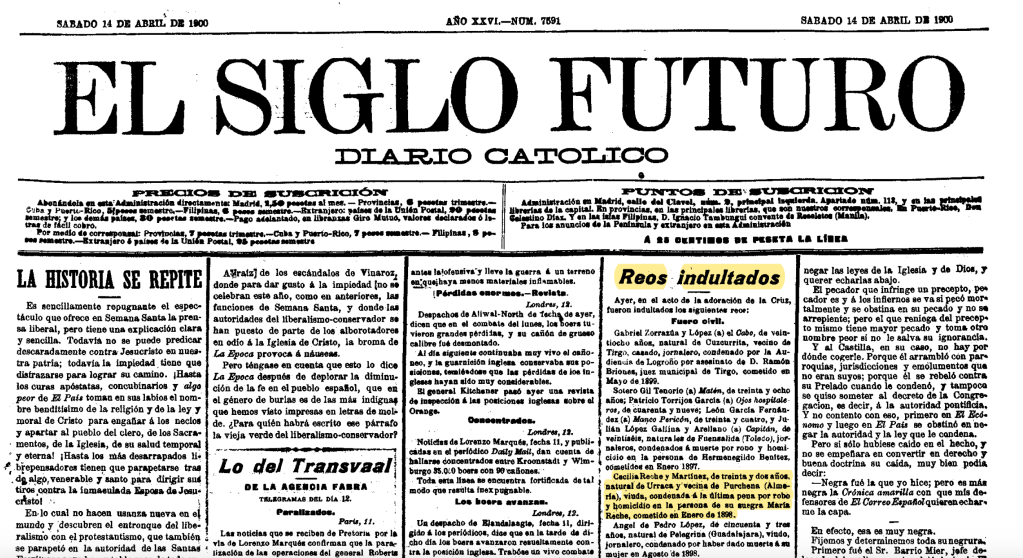
Cecilia went to prison soon after, accused of robbery and murder of her mother-in-law. Of her soul child, the one with the little ringlets, nothing was ever heard.
Or at least not until I decide to tell you about it, my good friends.
For the time being, enjoy the chestnuts and the stories, because winter will be here in no time.
See you all soon,
Clarita.
Author’s note: this story has been fictionalised from a real event that took place in January 1898 in Purchena. Any resemblance to reality is purely coincidental.
 CYBERNOVELS L'20S